ICMM drives consolidated global standard to strengthen traceability in critical minerals

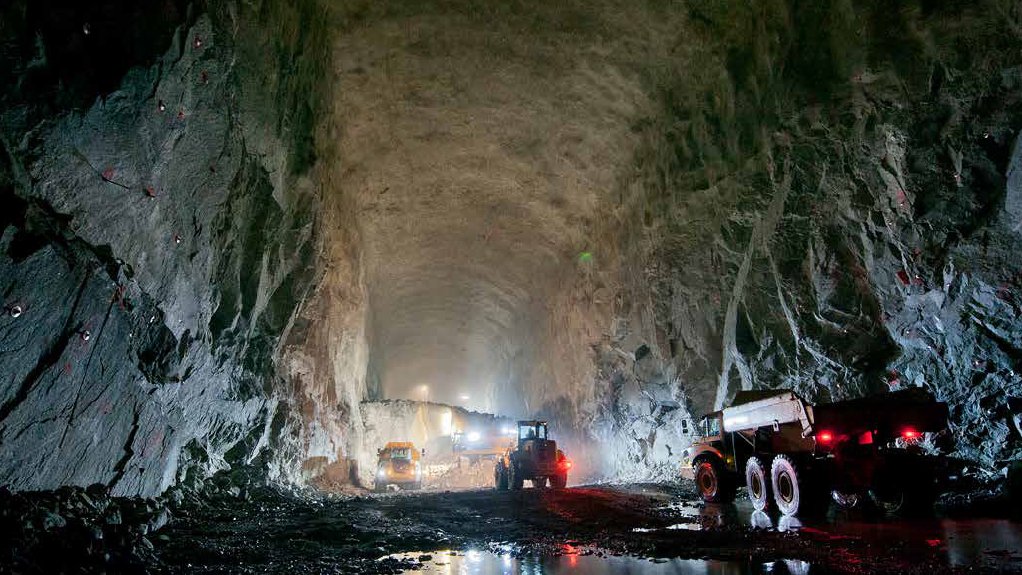


Photo by BecomingX/Worlds deepest marathon
ROHITESH DHAWAN Traceability is indispensable for building trust in mineral supply chains that
CHALLENGING PERCEPTIONS The World’s Deepest Marathon participants ranged from seasoned marathon runners to novices, including representatives from 20 mining companies
Photo by BecomingX/Worlds deepest marathon




There is an increased push to improve transparency and traceability, and implement a definitive global standard, across critical mineral supply chains – particularly those rooted in Africa, mining and metals advocacy group ICMM president Rohitesh Dhawan told Engineering News & Mining Weekly Africa Edition during an exclusive interview at the Investing in African Mining Indaba in Cape Town, in February.
Dhawan stressed that traceability is essential if buyers are to be confident that they are not complicit in human rights abuses, environmental harm or poor mining practices. Mining, he noted, can be conducted responsibly and leave a positive legacy for communities – or it can be done badly, with severe social and environmental consequences.
“In the absence of being able to trace a product from the mine through to the final element that a customer buys, how do you have confidence that you’re not part of a system that is not delivering for people and the environment?” he asked.
Yet traceability in mining is inherently complex. Minerals such as copper are rarely sourced from a single mine and processed in isolation. Instead, multiple mines supply one facility, where blending occurs before processing, refining and further downstream fabrication. This makes tracing individual units of ore back to a single origin extremely difficult.
Despite these challenges, Dhawan believes traceability is indispensable for building trust in mineral supply chains that underpin the global energy transition.
Consolidated Global Standard
To address fragmentation in reporting and performance measurement, ICMM and its partners have spent nearly four years developing a consolidated global mining standard. Dhawan described it as a “massive step forward” that will create a single framework through which producers measure and report performance across social and environmental indicators.
Until now, multiple standards have existed, often operating in silos. The new consolidated standard aims to harmonise these approaches and, from day one, will be adopted by a significant portion of the industry. ICMM hopes it will become the go-to global benchmark.
This standard lays the groundwork for more advanced traceability systems. “You can’t build digital traceability without first having a consolidated global standard,” Dhawan explained.
ICMM’s approach begins with transparency. Member companies publish their contracts with governments and disclose the taxes they pay, enabling citizens to assess whether mining activities deliver fair returns. The organisation also supports the Extractive Industries Transparency Initiative, which promotes open and accountable management of natural resources.
The ICMM Good Practice Guide for contract disclosure provides detailed guidance on what to disclose, how to manage commercially sensitive information and how to handle amendments to agreements. Dhawan hopes this commitment will extend beyond ICMM membership to the wider industry.
Once transparency is embedded, the next step is digital traceability. Emerging technologies such as blockchain and AI are expected to play a key role. AI, in particular, can help establish “inferred provenance” – assessing the likelihood of a mineral’s origin based on available data, rather than relying solely on paper trails.
This is especially important in a sector that includes not only large multinational miners but also small-scale and artisanal operators. Legal artisanal mining, Dhawan emphasised, provides vital livelihoods for millions. The challenge lies with illegal and criminalised operations, which pose risks to workers, communities and the broader industry.
Digital tools, he argued, are essential for capturing a fuller picture of the supply chain, rather than relying only on large companies’ reporting systems.
The World’s Deepest Marathon
Meanwhile, on a lighter note, Dhawan reflected on participating in the world’s deepest marathon, held 1 119m below sea level inside Boliden’s Garpenberg zinc mine, in Sweden, and recognised by Guinness World Records. The gruelling event involved 11 laps of a 3.84 km course, with a punishing uphill incline and no external stimulation.
The event was a unique collaboration between development specialists BecomingX, ICMM and Boliden. It highlighted safety, innovation and transformation in the modern mining industry.
Boliden CEO Mikael Staffas said that, as one of the safest and most technologically advanced mines in the world, Garpenberg was the perfect setting to show that mining can be both cutting-edge and purpose-driven, with conditions safe enough to stage extreme endurance events.
Dhawan said the experience highlighted the power of teamwork, diversity and resilience. Participants ranged from seasoned marathon runners to novices, and from mining professionals – including representatives from 20 mining companies – to those new to underground environments. Even ultra-runner Rory Coleman, holder of nine Guinness World Records and a participant in more than 1 200 marathons, described it as one of the toughest challenges he had faced.
A defining moment came when two South African runners, having already finished and exhausted themselves, returned to accompany a struggling teammate on her final lap – ensuring the group secured its world record.
The event also required complex logistics challenges, as the Boliden mine had to continue operating during the event, and every one of the 55 runners required 100 litres of water to get them through the race.
The project was supported by 23 sponsors, including official partners World Gold Council, Hindustan Zinc and Teck Resources, whose senior leaders took part in the underground marathon.
The event broke two world records – for deepest team marathon and deepest individual marathon – and raised more than £1-million for charity, including the Wild at Heart Foundation, which aims to compassionately reduce the world’s stray dog population through sterilisation, education and welfare programmes.
“This initiative could prevent an estimated 250-million dogs from being born into neglect, while also reducing public health risks associated with stray animals,” Dhawan said.
For Dhawan, the marathon embodied the same principles he sees as critical to mining’s future: collective effort, creative thinking and a willingness to challenge perceptions.
“This event shows just how far mining has come,” he said. “The World’s Deepest Marathon not only supports great causes but shines a light on the innovation, safety and humanity that define the modern, responsible mining industry.”
Just as runners pushed beyond what seemed possible underground, he believes the industry must stretch itself to deliver transparent, traceable and responsible supply chains that earn society’s trust.
Article Enquiry
Email Article
Save Article
Feedback
To advertise email advertising@creamermedia.co.za or click here
Research Reports
Projects


Latest Multimedia

Latest News
Showroom
CSIR International Convention Centre (CSIR ICC) - the leading conference and events venue in Pretoria/Tshwane.
VISIT SHOWROOM
Supplier & Distributor of the Widest Range of Accurate & Easy-to-Use Alcohol Breathalysers
VISIT SHOWROOM

Announcements
What's On
Subscribe to improve your user experience...
Option 1 (equivalent of R125 a month):
Receive a weekly copy of Creamer Media's Engineering News & Mining Weekly magazine
(print copy for those in South Africa and e-magazine for those outside of South Africa)
Receive daily email newsletters
Access to full search results
Access archive of magazine back copies
Access to Projects in Progress
Access to ONE Research Report of your choice in PDF format
Option 2 (equivalent of R375 a month):
All benefits from Option 1
PLUS
Access to Creamer Media's Research Channel Africa for ALL Research Reports, in PDF format, on various industrial and mining sectors
including Electricity; Water; Energy Transition; Hydrogen; Roads, Rail and Ports; Coal; Gold; Platinum; Battery Metals; etc.
Already a subscriber?
Forgotten your password?
Receive weekly copy of Creamer Media's Engineering News & Mining Weekly magazine (print copy for those in South Africa and e-magazine for those outside of South Africa)
➕
Recieve daily email newsletters
➕
Access to full search results
➕
Access archive of magazine back copies
➕
Access to Projects in Progress
➕
Access to ONE Research Report of your choice in PDF format
RESEARCH CHANNEL AFRICA
R4500 (equivalent of R375 a month)
SUBSCRIBEAll benefits from Option 1
➕
Access to Creamer Media's Research Channel Africa for ALL Research Reports on various industrial and mining sectors, in PDF format, including on:
Electricity
➕
Water
➕
Energy Transition
➕
Hydrogen
➕
Roads, Rail and Ports
➕
Coal
➕
Gold
➕
Platinum
➕
Battery Metals
➕
etc.
Receive all benefits from Option 1 or Option 2 delivered to numerous people at your company
➕
Multiple User names and Passwords for simultaneous log-ins
➕
Intranet integration access to all in your organisation